Payroll is one of the most important responsibilities of any business. Employees expect to
receive accurate salaries on time, while employers need to ensure that payroll calculations,
deductions, records, and reporting are handled properly.
As businesses grow, however, payroll becomes more complicated. More employees mean more
attendance records, salary calculations, deductions, leave information, overtime, government
contributions, and payroll records to manage. When these processes are handled manually, the
risk of delays and errors can increase.
This is where payroll automation becomes increasingly valuable.
Payroll automation uses software and digital processes to reduce repetitive manual work
involved in preparing and managing payroll. Instead of relying heavily on spreadsheets and
manual calculations, businesses can use technology to organize payroll information, automate
calculations, generate reports, and create a more consistent payroll workflow.
But payroll automation is not only about saving time.
It can also play an important role in payroll compliance.

For businesses operating in the Philippines, payroll compliance requires careful attention to applicable
tax obligations, employee compensation requirements, government contributions, payroll records, and
other employment-related responsibilities. A structured payroll system can help businesses manage these
responsibilities more efficiently.
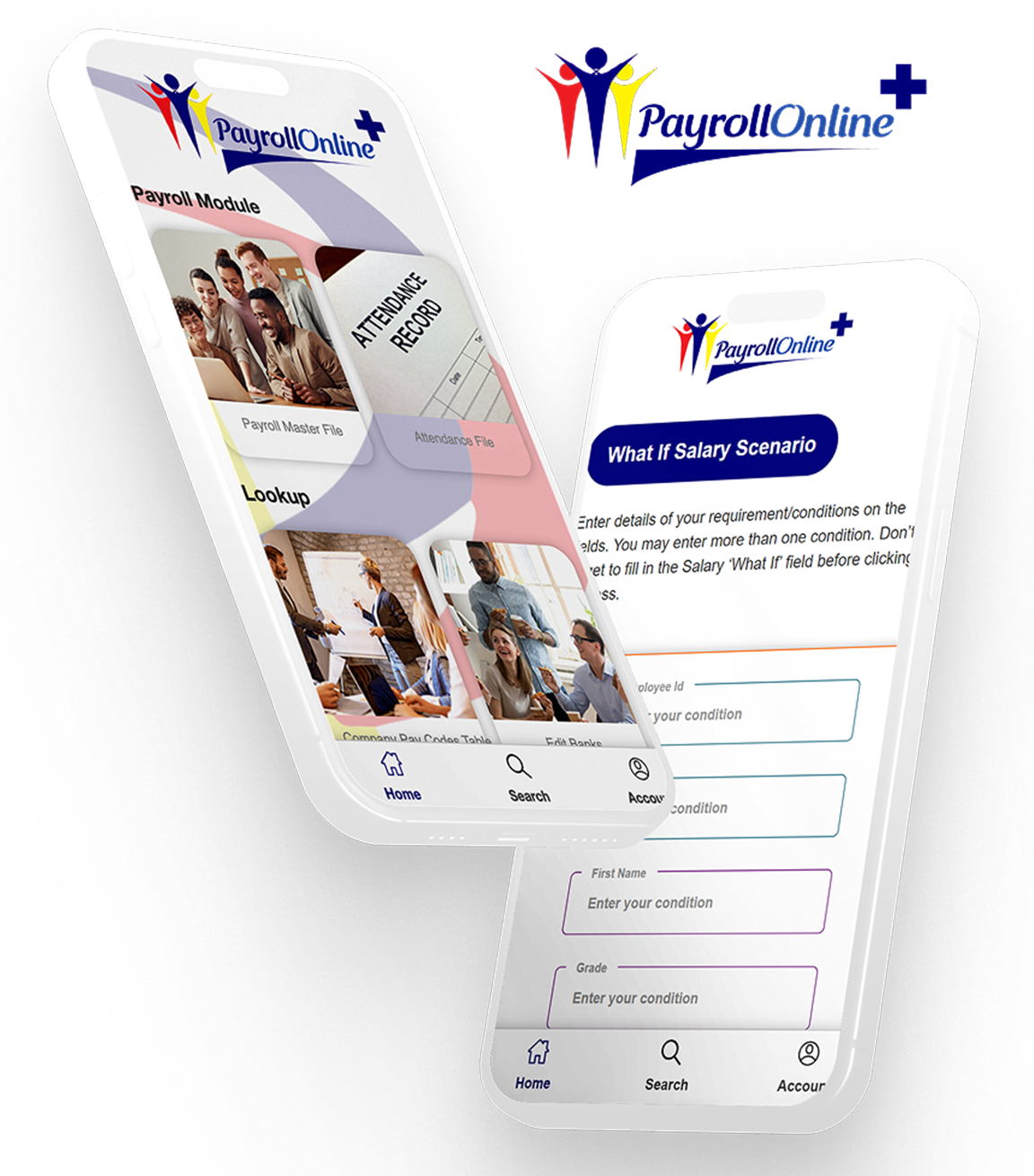
PayrollOnlinePlus provides businesses with a digital approach to payroll management designed to simplify
payroll processes and help organizations manage their payroll operations more efficiently.
This guide explores the relationship between payroll automation and compliance, the challenges of manual
payroll, the features businesses should consider, and how PayrollOnlinePlus can help create a more
organized payroll environment.
What Is Payroll Automation?
Payroll automation is the use of software and digital technology to automate repetitive payroll tasks.
Traditional payroll processing often involves collecting information from different sources, entering
data into spreadsheets, calculating salaries, checking deductions, preparing payslips, and generating
reports.
Automation reduces the amount of manual work involved in these activities.
Depending on the payroll system, automated processes may include salary calculations, deductions,
overtime calculations, government contribution calculations, payslip generation, payroll reports, and
employee record management.
The exact capabilities depend on the software and how the system is configured.
The main objective is to create a payroll process that is faster, more consistent, and less dependent on
manual calculations.
Why Payroll Compliance Matters
Payroll compliance refers to following the applicable laws, regulations, and requirements related to
employee compensation and payroll administration.
For Philippine businesses, payroll can involve several areas that require attention.
Employers may need to manage employee taxes, mandatory government contributions, compensation records,
statutory requirements, and payroll documentation.
Failure to properly manage these responsibilities can create financial and administrative problems.
Payroll errors can also affect employees directly.
Incorrect deductions, inaccurate salary calculations, or delayed corrections can reduce employee
confidence in the company's payroll process.
For this reason, payroll compliance should not be treated as a once-a-year activity.
It should be part of the organization's regular payroll process.
The Connection Between Payroll Automation and Compliance
Automation does not automatically make a business compliant.
However, a well-designed payroll system can help create processes that make compliance easier to manage.
For example, automated calculations can reduce the amount of manual arithmetic required.
Centralized employee records can help ensure that payroll information is organized.
Automated reports can make it easier to review payroll information.
Digital records can also provide a clearer history of payroll transactions.
These capabilities can support consistency and reduce the administrative burden associated with payroll.
The key is proper configuration.
Payroll software must be configured according to the company's payroll policies and applicable
requirements. Employee information must also be accurate and regularly updated.
Automation should therefore be viewed as a tool that supports compliance rather than a replacement for
proper payroll management.
How Automation Reduces Repetitive Payroll Work
One of the biggest benefits of payroll automation is reducing repetitive administrative tasks.
Instead of manually calculating every employee's payroll, a digital system can perform calculations
based on configured rules and employee information.
Instead of manually preparing individual payslips, the system can generate them electronically.
Instead of creating reports from scratch, payroll software can provide structured reporting tools.
This allows HR and finance teams to focus on reviewing information rather than performing every
calculation manually.
Automation can therefore shift payroll work from repetitive data entry toward monitoring, validation,
and decision-making.

Automated Payroll Calculations
Payroll calculations can involve multiple components.
An employee's final compensation may be affected by salary, attendance, overtime, leave,
deductions, taxes, contributions, allowances, and other payroll factors.
Manually calculating all of these components increases the risk of errors.
Payroll automation can help standardize calculations based on predefined rules.
When properly configured, the system can apply the relevant payroll rules consistently
across employees.
This does not eliminate the need for review.
Payroll administrators should still verify that employee information and system settings are
correct.
However, automation can significantly reduce the amount of manual calculation required.
Payroll Automation and Government Contributions
Government contributions are an important part of payroll administration in the Philippines.
Employers need to properly manage applicable employee and employer contributions and maintain
appropriate payroll records.
Manually calculating these amounts can become complicated as employee salaries and circumstances vary.
Automated payroll systems can help calculate applicable contributions according to configured rules.
This can reduce repetitive work and help create more consistent payroll processing.
Businesses should still ensure that their payroll software is properly maintained and updated when
applicable requirements change.
Technology is most effective when combined with proper payroll policies and regular review.
Tax and Payroll Management
Tax-related payroll responsibilities are another area where accuracy is critical.
Businesses need to properly manage applicable withholding and payroll tax calculations based on employee
compensation and relevant requirements.
Manual calculations can become difficult when businesses have many employees with different compensation
levels.
Payroll software can help automate calculations and organize relevant payroll information.
This can make payroll administration more efficient and reduce the need for employees to repeatedly
perform calculations manually.
However, businesses should work with qualified payroll or tax professionals when they need specific
advice regarding their tax obligations.
Software can support payroll processing, but organizations remain responsible for ensuring their
processes comply with applicable laws and regulations.
Attendance and Payroll Integration
Payroll automation becomes even more valuable when attendance information is connected to payroll.
Attendance can affect payroll through late arrivals, absences, undertime, overtime, and working hours.
When attendance and payroll systems are disconnected, HR teams may need to manually transfer information
between platforms.
This creates additional work and increases the risk of data entry mistakes.
Integrated systems can allow relevant attendance information to flow into payroll processing.
This creates a more connected workflow.
For businesses with large workforces, reducing manual transfers between systems can save significant
administrative time.
Leave Management and Payroll
Employee leave can also affect payroll.
Approved leave, unpaid absences, and other types of employee time off may need to be reflected in
payroll calculations depending on the company's policies and applicable requirements.
A digital HR and payroll environment can help connect leave records with payroll information.
Instead of maintaining separate spreadsheets for leave and payroll, businesses can use connected digital
records.
This improves visibility and makes it easier for HR teams to verify relevant information before payroll
is finalized.
Digital Payslips and Employee Access
Payroll automation can also improve the employee experience.
Traditional payroll processes may involve printing payslips and manually distributing them to employees.
Digital payroll systems can provide electronic access to payslips and relevant payroll information.
Employees can have a more convenient way to review their salary information without needing to request
documents from HR every pay period.
This can also reduce the administrative burden on HR teams.
When employees can access their own payroll information, HR personnel can spend less time handling
routine requests and more time focusing on higher-value activities.
Payroll Records and Reporting
Proper payroll records are important for both management and compliance purposes.
Businesses may need payroll information for internal reporting, accounting, audits, employee
inquiries, and other administrative purposes.
Manual recordkeeping can make it difficult to organize and retrieve information.
Payroll automation provides a centralized environment where payroll data can be stored and
organized.
Reporting tools can help businesses generate payroll summaries and other relevant
information.
This can make it easier for HR and finance teams to review payroll activity.
It can also provide management with better visibility into payroll costs.

Payroll Security and Employee Data Protection
Payroll contains highly sensitive information.
Employee salaries, personal information, tax-related data, and other records need to be handled
carefully.
Businesses should therefore consider security when choosing payroll software.
A payroll system should provide appropriate access controls so that employees and administrators only
have access to information relevant to their roles.
For example, an employee may need access to their own payslip, while an HR administrator may require
broader access to payroll records.
Businesses should also consider authentication, data storage, system access, and other security
practices when evaluating a payroll platform.
Payroll automation should make payroll more efficient without compromising the protection of employee
information.
Why PayrollOnlinePlus Can Help Businesses Modernize Payroll
For organizations looking to move away from heavily manual payroll processes, PayrollOnlinePlus provides
a digital platform designed to help businesses manage payroll more efficiently.
Instead of relying on spreadsheets and repetitive manual calculations, businesses can use
PayrollOnlinePlus to create a more structured payroll workflow.
The platform can help businesses organize employee payroll information and streamline routine payroll
processes.
This can be particularly useful for growing companies that are finding it increasingly difficult to
manage payroll manually.
As the workforce grows, businesses need payroll processes that can handle additional employees without
creating an equivalent increase in administrative workload.
PayrollOnlinePlus provides a technology-driven approach that can help businesses simplify payroll
management while creating a more organized environment for payroll administration.
The Benefits of Payroll Automation for Growing Businesses
Payroll automation can provide several advantages as a business expands.
Less Manual Work
Automation reduces repetitive calculations, data entry, and administrative tasks.
Better Consistency
Standardized payroll rules can help create more consistent processing across employees.
Faster Payroll Processing
Digital workflows can reduce the time required to prepare payroll.
Better Employee Access
Employees can have easier access to payroll information through digital systems.
Improved Reporting
Automated reports can provide businesses with clearer payroll information.
Greater Scalability
A digital payroll process can make it easier to support a growing workforce.
These benefits can make payroll automation a valuable investment for businesses that want to improve
operational efficiency.
Automation Does Not Replace Human Oversight
It is important to understand that automation does not mean payroll can run completely without people.
Payroll administrators still need to review employee information, verify payroll results, monitor system
settings, and address exceptions.
For example, if an employee's salary changes, the appropriate information needs to be updated.
If a payroll policy changes, the system may need to be reconfigured.
If an unusual payroll transaction occurs, someone may need to investigate it.
The best approach is to combine automation with human oversight.
Software handles repetitive tasks.
Payroll professionals handle decisions, reviews, exceptions, and accountability.
This combination can produce a stronger payroll process than either manual work or automation alone.
The Future of Payroll Is More Connected and Automated
Payroll technology continues to evolve.
Businesses are increasingly connecting payroll with attendance systems, HR management platforms,
employee self-service tools, accounting systems, and other business applications.
This creates a more connected flow of employee and payroll information.
Instead of having separate systems that require manual data transfers, businesses can create integrated
workflows.
Automation can also provide better visibility into payroll information.
Managers can access reports more quickly, employees can access their information more easily, and HR
teams can spend less time maintaining spreadsheets.
The future of payroll is therefore not simply about calculating salaries faster.
It is about creating a connected digital payroll environment that supports the entire employee
lifecycle.
Creating a More Reliable Payroll Process With PayrollOnlinePlus
Payroll automation can help businesses reduce repetitive work, improve consistency, organize payroll
information, and support more efficient payroll administration.
When combined with appropriate compliance practices, it can also help organizations establish a more
structured approach to managing payroll responsibilities.
However, successful payroll automation requires more than purchasing software.
Businesses need accurate employee data, clearly defined policies, proper system configuration, trained
users, regular reviews, and appropriate security practices.
For businesses looking for a digital payroll solution, PayrollOnlinePlus can help provide the technology
foundation needed to move away from heavily manual payroll processes.
By centralizing payroll information and streamlining repetitive tasks, PayrollOnlinePlus can help
businesses create a more efficient payroll workflow that can grow alongside their organization.
Ultimately, payroll automation is about more than saving a few hours each pay period.
It is about building a payroll process that is more organized, efficient, consistent, and easier to
manage.
As businesses continue to adopt digital technology, payroll should not remain dependent on spreadsheets
and repetitive manual work.
With the right technology and processes in place, organizations can spend less time managing payroll
administration and more time focusing on their employees and business goals.
PayrollOnlinePlus provides businesses with an opportunity to take that step toward a more modern payroll
environment—where automation supports efficiency and structured processes help businesses manage payroll
with greater confidence.