Running a successful business involves much more than generating sales and serving
customers. Behind every thriving organization is a payroll process that ensures employees
are paid accurately, on time, and in compliance with government regulations. While payroll
may seem straightforward at first, it quickly becomes more complex as a business grows.
Salary adjustments, overtime, holiday pay, tax deductions, government contributions, and
payroll reporting all require precision and consistency.
Many small businesses begin by processing payroll manually through spreadsheets or
handwritten computations. Although this approach may work for a handful of employees, it
becomes increasingly time-consuming and prone to errors as the workforce expands. A single
mistake in payroll can affect employee trust, delay salary releases, or even lead to
compliance issues and financial penalties.
This is why more organizations are investing in payroll software. Rather than spending hours
calculating salaries and checking formulas, businesses can automate payroll processes,
improve accuracy, and free up valuable time for more strategic work.
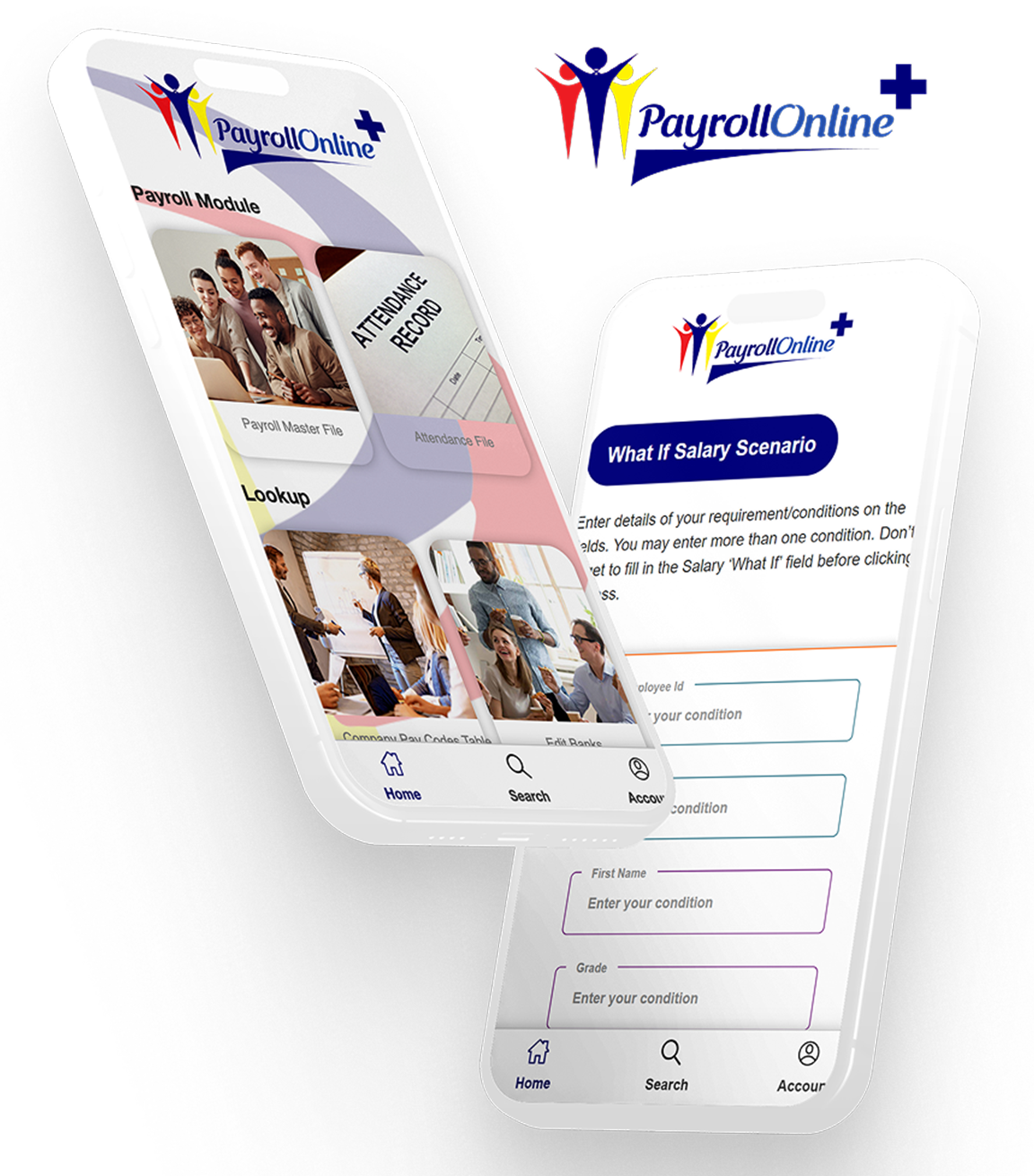
If you've ever wondered what payroll software is, how it works, and whether your business truly needs it, this guide will walk you through everything you need to know. You'll also discover how PayrollOnlinePlus helps Philippine businesses simplify payroll management with a modern, cloud-based solution.
Understanding Payroll Software
Payroll software is a digital solution designed to automate the process of calculating employee
salaries,
deductions, taxes, benefits, and government contributions. Instead of relying on manual computations or
multiple spreadsheets, payroll software performs these calculations using predefined rules and current
payroll regulations.
At its core, payroll software ensures that employees receive the correct salary every payroll period
while
helping businesses stay compliant with labor and tax requirements.
Modern payroll systems also generate payslips, prepare payroll reports, manage payroll records, and
simplify
mandatory government reporting, making payroll administration significantly more efficient than
traditional
methods.
For businesses of any size, payroll software transforms what was once a repetitive administrative task
into
a streamlined and reliable process.
Why Payroll Matters More Than Ever
Payroll is one of the most important responsibilities within any organization because it directly
affects
every employee.
Employees expect to be paid accurately and on time. Even small payroll mistakes can reduce morale,
create
unnecessary stress, and damage trust between employees and management.
At the same time, businesses must comply with various government requirements involving taxes, statutory
deductions, and mandatory reports. Failing to meet these obligations may result in penalties, audits, or
legal concerns.
Payroll software helps businesses manage these responsibilities consistently while reducing the
likelihood
of human error.
Beyond compliance, efficient payroll processing contributes to a better employee experience and allows
HR
and finance teams to focus on higher-value activities rather than repetitive administrative work.
How Payroll Software Works
Payroll software follows a structured process that automates nearly every stage of payroll
administration.
Employee information, salary structures, attendance records, overtime hours, leave data, and other
payroll-related information are entered into the system or synchronized from integrated attendance and
HR
platforms.
The software then calculates employee earnings based on company policies and applicable regulations. It
automatically computes deductions, taxes, government contributions, overtime, holiday pay, and other
payroll
components before generating final payroll results.
Once calculations are complete, payroll administrators can review the information, generate reports,
release
electronic payslips, and prepare payroll files for bank transfers or accounting records.
Because calculations are automated, payroll processing becomes faster, more accurate, and easier to
manage.
Key Features of Modern Payroll Software
Although payroll systems vary between providers, most modern solutions include several essential
capabilities that simplify payroll management.
Automated Salary Computation
Payroll software automatically calculates employee salaries based on attendance, schedules, overtime,
allowances, deductions, bonuses, and company policies.
Government Compliance
The system computes mandatory deductions and contributions while helping businesses prepare reports
required
by Philippine government agencies.
Payslip Generation
Digital payslips are generated automatically, allowing employees to access payroll information quickly
and
securely.
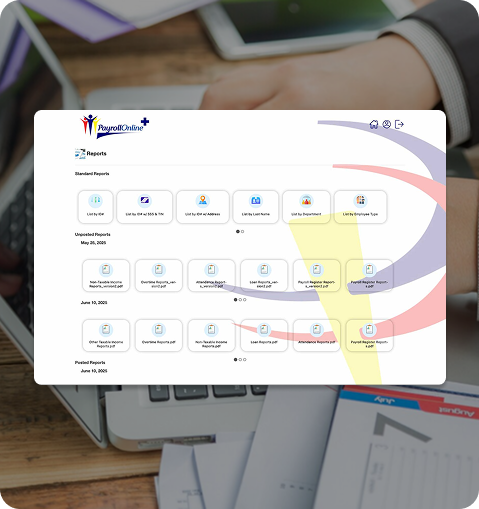
Payroll Reports
Payroll administrators can generate detailed reports that support accounting, auditing, budgeting, and
financial analysis.
Employee Records Integration
Many payroll systems integrate with HR and attendance platforms, reducing duplicate data entry while
improving payroll accuracy.

The Advantages of Using Payroll Software
One of the greatest advantages of payroll software is time savings.
Manual payroll often requires several days of preparation, especially for organizations with
many employees. Payroll software significantly shortens this process by automating
repetitive calculations and reducing administrative workload.
Accuracy also improves dramatically. Automated calculations minimize errors caused by
incorrect formulas, manual encoding, or outdated payroll information.
Another important benefit is improved compliance. Payroll software keeps payroll
calculations aligned with current tax rules and government contribution requirements,
helping businesses reduce compliance risks.
Businesses also gain stronger security. Payroll information contains highly sensitive employee data, and
digital payroll systems provide controlled access, secure storage, and detailed audit records that
protect
confidential information.
Finally, payroll software provides valuable reporting capabilities that help business leaders understand
labor costs, payroll trends, and overall workforce expenses.
Common Challenges of Manual Payroll
Many businesses continue using spreadsheets because they appear simple and inexpensive.
However, manual payroll often introduces hidden costs that become more significant over time.
Payroll administrators spend hours entering employee information, updating formulas, verifying
attendance
records, calculating deductions, and preparing reports.
As organizations grow, these repetitive tasks become increasingly difficult to manage.
Manual payroll also increases the likelihood of:
These challenges not only affect payroll teams but can also reduce employee confidence and increase operational costs.
Is Payroll Software Only for Large Companies?
One of the biggest misconceptions is that payroll software is designed only for large corporations.
In reality, businesses of every size can benefit from payroll automation.
Small businesses often operate with limited HR and finance resources, making automation especially
valuable.
By reducing administrative work, payroll software allows smaller teams to accomplish more without
increasing
staffing costs.
As companies grow, payroll software scales alongside the business, making it easier to process payroll
for
additional employees without significantly increasing workload.
Whether a business employs ten people or several thousand, payroll accuracy remains equally important.
Cloud-Based Payroll Is Changing the Way Businesses Work
Traditional payroll systems were often installed on office computers, limiting access and requiring
manual software updates.
Today's cloud-based payroll platforms offer greater flexibility.
Payroll administrators can securely access payroll information from virtually anywhere with an internet
connection. Updates are delivered automatically, ensuring businesses always use the latest version of
the software.
Cloud technology also improves collaboration between HR, finance, and management while providing secure
backup and disaster recovery capabilities.
For businesses embracing digital transformation, cloud payroll offers both convenience and scalability.
How Payroll Software Supports Business Growth
Payroll software is more than a tool for paying employees. It plays an important role in
helping businesses operate more efficiently as they expand.
As organizations grow, payroll becomes increasingly complex due to additional employees,
multiple departments, varying work schedules, and changing compensation structures.
Automation enables payroll teams to manage this complexity without dramatically increasing
administrative effort.
Payroll data also supports financial planning by providing accurate labor cost information,
helping leaders make informed decisions regarding hiring, budgeting, and resource
allocation.
In the long run, payroll software becomes an essential component of a scalable business
operation.

Why Businesses Choose PayrollOnlinePlus
Choosing payroll software is about more than finding a system that performs calculations. Businesses
need a
solution that is reliable, user-friendly, secure, and designed to meet the unique payroll requirements
of
Philippine organizations.
PayrollOnlinePlus is a cloud-based payroll solution built to simplify payroll processing while ensuring
accuracy and compliance. The platform helps businesses automate salary computations, manage statutory
deductions, generate electronic payslips, prepare payroll reports, and streamline payroll administration
through an intuitive interface.
By reducing manual computations and repetitive administrative work, PayrollOnlinePlus enables HR and
finance
teams to process payroll more efficiently while minimizing errors. The system also supports integration
with
attendance and HR processes, helping organizations maintain consistent employee data across different
functions.
Whether you're a startup, a growing small business, or a large enterprise managing multiple payroll
cycles,
PayrollOnlinePlus provides the flexibility and scalability needed to support your organization's
continued
growth.
Choosing the Right Payroll Software
Every business has different payroll requirements, so selecting the right system requires careful
evaluation.
When comparing payroll solutions, consider ease of use, compliance capabilities, scalability, reporting
features, security, cloud accessibility, customer support, and integration with existing HR or
attendance systems.
A payroll solution should simplify daily operations rather than create additional complexity. It should
also be capable of adapting to future business growth without requiring major process changes.
Investing in the right payroll software today can save countless hours while reducing operational risks
for years to come.
Final Thoughts
Payroll is one of the most critical business functions because it directly affects employees, financial
operations, and regulatory compliance. As businesses continue to grow, relying on manual spreadsheets
and
repetitive calculations becomes increasingly inefficient and risky.
Payroll software provides a smarter, faster, and more accurate way to manage payroll by automating
salary
computations, tax calculations, government contributions, reporting, and payroll administration. It not
only
improves operational efficiency but also strengthens employee trust by ensuring salaries are processed
correctly and on time.
For businesses in the Philippines, adopting cloud-based payroll technology is an important step toward
digital transformation. Solutions like PayrollOnlinePlus help organizations reduce manual work, improve
compliance, strengthen payroll security, and create more efficient payroll operations that can scale
alongside business growth.
Whether you're processing payroll for a small team or managing a growing workforce across multiple
locations, investing in modern payroll software is an investment in efficiency, accuracy, and long-term
business success.