Payroll is one of the most important functions in any organization. Every pay period,
businesses need to accurately calculate employee salaries, deductions, taxes, government
contributions, overtime, leave-related adjustments, and other compensation components.
Employees expect their salaries to be correct and released on time, while employers need to
maintain accurate records and fulfill their payroll responsibilities.
For small businesses, payroll may initially be manageable using spreadsheets, calculators,
and manual records. However, as the workforce grows, payroll becomes increasingly complex.
More employees mean more calculations, more records, more deductions, and more opportunities
for human error.
This is where the difference between manual payroll and payroll software becomes
particularly important.
Manual payroll relies heavily on spreadsheets, paper records, calculators, and human
intervention. Payroll software, on the other hand, uses automation to calculate salaries,
process deductions, manage employee information, generate payslips, and organize payroll
reports.

Neither approach should be evaluated simply by asking which one is cheaper. Businesses need to consider
accuracy, efficiency, scalability, security, compliance, employee experience, and the amount of
administrative work involved.
In this article, we compare manual payroll and payroll software, examine the advantages and limitations
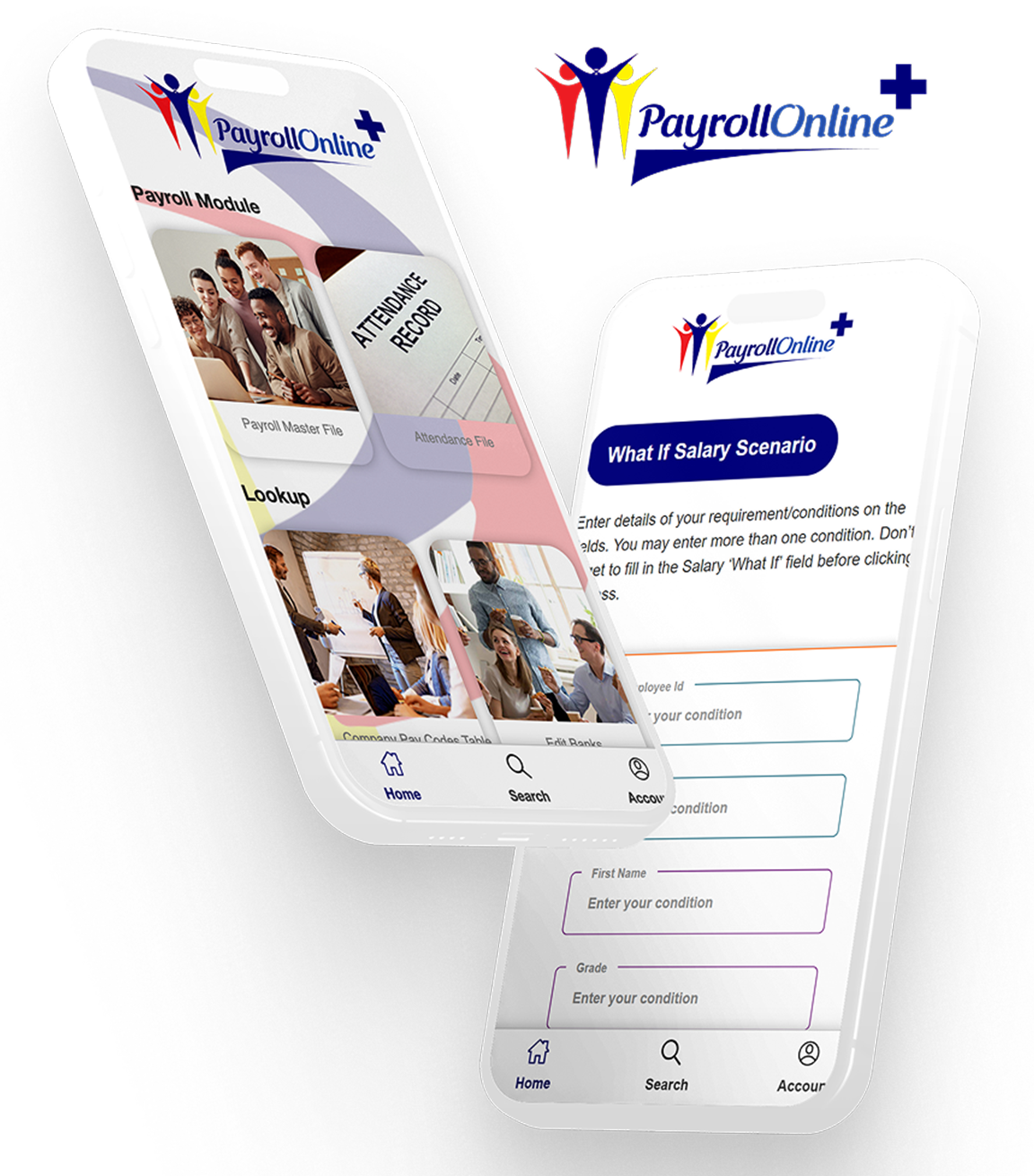
of each approach, and explain why PayrollOnlinePlus can help businesses move toward a more efficient and
modern payroll process.
Understanding Manual Payroll Processing
Manual payroll refers to a payroll process where most calculations, data entry, verification, and
recordkeeping are performed by employees using tools such as spreadsheets, calculators, paper forms, or
basic accounting applications.
A typical manual payroll process may involve collecting attendance records, calculating working hours,
checking overtime, determining gross salary, applying deductions, calculating taxes and government
contributions, preparing payslips, and producing payroll reports.
For a very small organization, this process may appear straightforward.
If a company has only a handful of employees with simple salary structures, manual payroll may not
require a significant amount of time.
The challenge begins when the organization grows.
More employees introduce more variables. Different schedules, overtime, allowances, deductions, leave
adjustments, and compensation structures can make payroll significantly more difficult to manage
manually.
The Traditional Payroll Workflow
A manual payroll process often requires several separate steps.
First, HR or payroll personnel collect attendance information. They may need to review time-in and
time-out records, absences, late arrivals, overtime, and approved leave.
The payroll team then enters this information into a spreadsheet.
Next, salaries are calculated and deductions are applied. Government contributions and tax-related
calculations may require additional steps.
After the calculations are completed, payroll personnel review the results for errors before preparing
payslips and finalizing the payroll.
Finally, reports and records are stored for future reference.
Every step creates an opportunity for mistakes.
A single incorrect cell in a spreadsheet can potentially affect an employee's salary calculation.
The Advantages of Manual Payroll
Manual payroll isn't necessarily wrong for every business.
For very small organizations, it can provide flexibility without requiring an initial investment in
specialized software.
Businesses with only a few employees and relatively simple compensation structures may find spreadsheets
sufficient for basic payroll management.
Manual processes can also be customized easily. A payroll administrator can create formulas and
worksheets based on the organization's specific requirements.
However, these advantages tend to become less significant as a company grows.
The larger the workforce and the more complicated the payroll structure, the more difficult it becomes
to maintain accuracy manually.

The Hidden Costs of Manual Payroll
One of the biggest misconceptions about manual payroll is that it is always cheaper.
Although spreadsheets and calculators may have low direct costs, manual payroll requires
significant employee time.
HR and finance teams may spend hours checking formulas, entering data, correcting mistakes,
preparing reports, and answering payroll-related questions.
These hours represent a real business cost.
There is also the potential cost of errors.
Incorrect salary calculations can lead to employee dissatisfaction, additional
administrative work, and potential compliance issues.
A process that appears inexpensive at first may therefore become increasingly expensive as
the business grows.
What Is Payroll Software?
Payroll software is a digital system designed to automate and organize payroll processing.
Instead of calculating every payroll component manually, businesses can use software to process employee
information, attendance, compensation, deductions, taxes, and other payroll-related data through a
centralized platform.
Modern payroll systems can automate repetitive calculations and generate payroll outputs such as
payslips and reports.
The objective isn't simply to make payroll faster.
The bigger goal is to create a more structured, consistent, and manageable payroll process.
How Payroll Software Changes the Payroll Process
With payroll software, employee information can be stored in a centralized system.
Attendance and other relevant information can be incorporated into payroll calculations depending on the
system's capabilities and configuration.
Instead of manually creating formulas for every employee, the system applies configured payroll rules
automatically.
The payroll team can then review the results, make authorized adjustments when necessary, approve
payroll, and generate the required outputs.
This significantly reduces repetitive administrative work.
It also creates a clearer audit trail because payroll information is maintained within a structured
digital environment rather than being spread across multiple spreadsheets and files.
Accuracy and Error Reduction
Payroll accuracy is one of the strongest arguments for automation.
Payroll involves numerous calculations, and even experienced payroll professionals can make mistakes
when working with large amounts of data.
Common errors may include incorrect deductions, missed overtime, inaccurate working hours, duplicated
entries, or incorrect formulas.
Payroll software can reduce many of these risks by applying standardized calculations consistently.
However, automation doesn't eliminate every possible error.
Incorrect employee information or improperly configured payroll rules can still produce incorrect
results.
This is why payroll software should be viewed as a tool that supports payroll professionals rather than
a replacement for proper review and oversight.
Saving Time During Every Payroll Cycle
Manual payroll can consume significant amounts of time.
Payroll staff may need to gather information from different sources, enter data, update
formulas, verify calculations, prepare payslips, and create reports.
Payroll software can streamline many of these steps.
Once employee information and payroll rules have been configured, recurring payroll tasks
can be processed much more efficiently.
The time saved can then be redirected toward more valuable activities such as employee
support, financial planning, HR strategy, and business operations.
For growing businesses, this time savings can become increasingly significant.

Better Payroll Records and Reporting
Payroll records are important for both internal management and compliance purposes.
Businesses may need to review historical payroll information, generate reports, answer employee
questions, or provide documentation when necessary.
Manual payroll often results in information being stored across different spreadsheets, folders, and
documents.
This can make historical information difficult to locate.
Payroll software provides a centralized environment where payroll information can be organized and
accessed more efficiently.
Businesses can generate reports based on available system features, making it easier to analyze payroll
information and maintain organized records.
Employee Experience Matters Too
Payroll isn't only an HR or finance function. It directly affects employees.
Employees want to understand how their salaries were calculated and what deductions were applied.
Digital payroll systems can improve the employee experience by providing access to payslips and relevant
payroll information through a centralized platform, depending on the system's available features.
This reduces the need for employees to repeatedly contact HR for basic payroll documents.
Greater access to information can also improve transparency and trust.
Security and Payroll Data
Payroll contains highly sensitive information.
Employee salaries, personal information, tax details, government contribution information, and other
records need to be handled carefully.
Manual spreadsheets can create security risks if files are stored on unsecured computers, shared through
email, or duplicated across multiple locations.
Modern payroll platforms can provide controlled access, user permissions, authentication, and
centralized data management.
Businesses should still evaluate the security practices of any payroll provider before implementation.
Technology can improve security, but organizations must also establish appropriate internal policies for
protecting payroll information.
Scalability and Business Growth
Manual payroll becomes increasingly difficult as employee numbers increase.
A company that manages payroll for ten employees may have no major difficulties using spreadsheets.
The same approach can become significantly more complicated with fifty, one hundred, or several hundred
employees.
Payroll software is designed to support larger volumes of employee information without requiring the
payroll team to increase manual effort at the same rate.
This scalability makes payroll automation particularly valuable for growing businesses.
Instead of replacing the payroll process every time the organization expands, businesses can continue
building on an existing digital system.
Why Businesses Choose PayrollOnlinePlus
For businesses ready to move beyond spreadsheets and manual payroll processes, choosing the right
payroll platform is an important decision.
PayrollOnlinePlus is designed to help Philippine businesses modernize payroll management through a
centralized digital platform.
Instead of relying heavily on manual calculations and disconnected spreadsheets, businesses can use
PayrollOnlinePlus to streamline payroll processes and organize employee payroll information in one
place.
The platform can help automate essential payroll tasks such as salary calculations, deductions,
government contribution calculations, payslip generation, and payroll reporting, depending on the
organization's configuration and requirements.
This reduces repetitive administrative work while providing HR and finance teams with a more structured
payroll workflow.
Another advantage is accessibility. With a digital payroll environment, authorized users can manage
payroll information more efficiently without depending entirely on physical documents or individual
spreadsheet files.
For growing organizations, PayrollOnlinePlus can also provide a more scalable foundation for payroll
management.
Rather than continuously expanding manual processes as the workforce increases, businesses can adopt a
system designed to handle payroll more efficiently.
Most importantly, PayrollOnlinePlus focuses on the needs of Philippine businesses, making it a practical
option for organizations looking to transition from traditional payroll processes to modern payroll
management.
Final Thoughts
The difference between manual payroll and payroll software goes far beyond spreadsheets versus
technology.
It is a difference between a process that relies heavily on repetitive human effort and a process
designed to automate, organize, and streamline payroll management.
Manual payroll may work for small businesses with simple requirements, but its limitations become
increasingly apparent as organizations grow. More employees, more complex compensation structures,
additional reporting requirements, and increased administrative workloads can make spreadsheets
difficult to maintain.
Payroll software provides businesses with a more efficient alternative.
By automating calculations, organizing employee information, generating payslips and reports, and
reducing repetitive administrative tasks, payroll software can help businesses save time and improve
payroll accuracy.
For Philippine businesses looking to make this transition, PayrollOnlinePlus provides a modern platform
designed to simplify payroll management and support growing organizations.
Ultimately, the best payroll approach is the one that allows your business to process salaries
accurately, efficiently, securely, and consistently.
As your workforce grows, investing in payroll automation isn't simply an upgrade to your payroll
process. It is an investment in better operations, stronger employee experiences, and a more scalable
foundation for the future of your business.